In addition to 2D animation, during the Character Animation Master’s course at UAL, I also explored the world of 3D animation. I decided to do this because I wanted to increase my professional opportunities and understand how animation works in different formats. When I first started, both my classmates and my teachers gave me an important piece of advice: I should focus on creating a few well-made projects to include in my showreel, instead of trying to produce too many complicated pieces. A strong and simple showreel is often more effective than a long one.
During the course, I had the chance to experiment with 3D software such as Maya and Blender. At the beginning, I worked on very basic animation exercises to build a clean and simple showreel. I downloaded ready-made character models from the internet and started animating them. However, I soon discovered that working in 3D was much harder than I expected. For example, creating a walk cycle took me an entire month, even though in traditional animation I could draw one in just a day. This made me understand how different 3D animation is, especially when it comes to controlling the rig, the curves, and the timing.
Besides the walk cycle, I also worked on a bouncing ball interacting with a character and on a pull-up exercise. Even though I completed these tasks, I was not completely satisfied with the final results. But I reminded myself that it was my first experience with 3D animation, and it was normal to feel this way. After putting all my small exercises together, I prepared a simple showreel and sent it, together with my CV, to several studios for summer internships. I did not receive any responses, but I was not surprised because of my limited experience in 3D at that time.
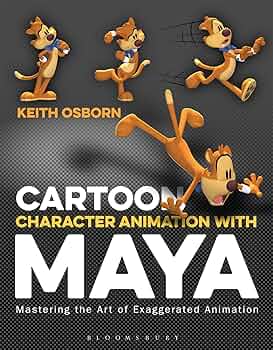
To continue learning more about the 3D animation world, I bought and read Character Animation with Maya by Keith Osborn. This book was extremely helpful because it explains the basic principles of animation in the context of a 3D software like Maya. One of the most interesting aspects of the book is that between chapters, it includes interviews with veteran 3D animators such as Matt Williames, Ricardo Jost, Pepe Sánchez, T. Dan Hofstedt, and Jason Figliozzi. What I noticed from these interviews is that many 3D animators actually started as traditional animators. This means that the essential rules of animation are always the same; only the tools change.
For a 3D animator, the most important thing is to find their own workflow when creating animations. Besides understanding the basic animation principles, an animator must also learn how to use the essential tools inside the software. With time and experimentation, each animator develops their own method to achieve satisfying results. The process is long, but it becomes more natural with practice.
Leave a Reply